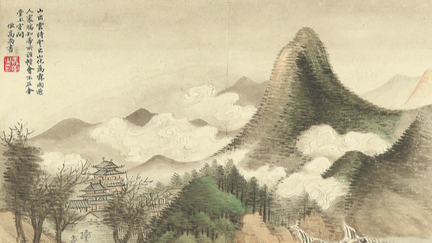
Wang Hui (painter)
Introduction
Wang Hui (1632-1717) was a notable Chinese painter of the Qing Dynasty, renowned for his significant contributions to the development of landscape painting. He is recognized as one of the "Four Wangs," a group of four influential landscape painters during the early Qing period. Wang Hui's work was instrumental in shaping the orthodox style of landscape painting during his time. His works are characterized by their integration of elements from both southern and northern Chinese painting traditions, as well as their detailed observations of nature.
Early Life and Education
Wang Hui was born into a family of professional painters, which provided him with an early exposure to the arts. His talent was recognized at a young age, and he was brought into the fold by Wang Shimin, a prominent painter of the time. Despite having no familial connection, Wang Hui and Wang Shimin shared a mutual appreciation for history and art, which fostered a strong mentor-student relationship. Under Wang Shimin's guidance, Wang Hui was able to access a vast collection of historical paintings, which played a crucial role in his artistic development. This access to important works from preceding eras, coupled with his innate talent, allowed Wang Hui to develop a unique style that would later define his career.
Artistic Style and Techniques
Wang Hui's artistic style was characterized by his ability to blend elements from various master painters throughout history, creating a unique synthesis of techniques and styles. His works often reflected a deep and heroic atmosphere, capturing the essence of the landscapes he depicted. Wang Hui was particularly adept at utilizing brushwork to convey both abstract and representational elements in his paintings, allowing viewers to experience his art on multiple levels. His landscapes were not merely visual depictions but were imbued with the expressive brushstrokes that revealed the artist's own emotional connection to the scenery. This approach resonated with the literati painting tradition, which emphasized the interplay of poetry, calligraphy, and painting.
Major Works
Among Wang Hui's most notable works is the Southern Inspection Tour, a grand handscroll depicting the Kangxi Emperor's tour of southern China. This piece exemplifies Wang Hui's mastery in capturing the majesty of the imperial procession while integrating traditional Chinese painting techniques with an acute sense of depth and perspective. Another significant work is Shadows of Paulownia Trees in the Autumn Evening, which showcases his ability to infuse landscapes with dynamic texture and detail. Wang Hui's body of work includes numerous handscrolls, albums, and fans that collectively reflect his dedication to both historical fidelity and innovative artistry.
Influence and Legacy
His work not only shaped the aesthetic preferences of the Qing court but also influenced subsequent generations of painters. Through his integration of historical styles with personal innovation, Wang Hui helped elevate the status of landscape painting and reinforced its importance within Chinese art. His legacy is preserved in collections across the world, where his paintings continue to be studied and appreciated for their artistic and historical significance.
Recognition and Awards
During his lifetime, Wang Hui was recognized as a prominent figure in the Qing art scene, receiving various accolades and commissions from the imperial court. His paintings were highly valued and sought after, contributing to his reputation as one of the leading artists of his time. Although specific awards from the period are not well-documented, his inclusion in major exhibitions and the continued reverence of his work speak to the high esteem in which he was held by contemporaries and successors alike.
Exhibitions
Wang Hui's artwork has been featured in numerous exhibitions, both during his lifetime and posthumously. Notable exhibitions have been held at prestigious institutions such as the Palace Museum in Beijing and the Metropolitan Museum of Art in New York. These exhibitions often showcase his work alongside those of other renowned artists, emphasizing his role in the broader context of Chinese art history. His pieces continue to be displayed in exhibitions worldwide, allowing audiences to engage with and appreciate the intricacies of his landscape paintings.








